If your menstrual disc feels stuck, don't panic. It can't get lost inside your body. Relax your pelvic floor, try a different position, and gently hook the rim to remove it. With a little practice and the right technique, removal becomes much easier and more comfortable.
In this article, we'll explain what's happening in your vaginal canal and why your cervix or pubic bone might make it tricky to grab your disc.
We'll give you step-by-step instructions to get it out with confidence. Because here's what we believe: menstrual care should never feel like a guessing game. You deserve clear answers and real support.
Stuck Menstrual Disc? First, Don’t Panic
Sometimes a menstrual disc can feel really hard to reach. If you have a high cervix, your disc might sit higher up in your vagina than you expected.
Tense vaginal muscles, often a reaction to the anxiety of feeling a disc stuck in place, can tighten the space and make the rim difficult to grasp. The disc may shift during sleep, exercise, or other movement.
Before you reach in to retrieve a menstrual disc, a few facts may help calm your nervous system. The vaginal canal is closed, meaning the disc or cup cannot travel past the cervix.
The front rim of a menstrual disc should sit tucked behind the pubic bone. If it is not positioned there, the disc may not sit correctly or catch blood effectively.
Worrying tightens the pelvic floor and vaginal muscles, making removal harder. Pausing, taking deep breaths, and relaxing your muscles before trying again is a helpful step.
Whether you're new to using a menstrual disc after switching from tampons or pads, understanding this anatomy can make removal easier.
Key Insight: Panic tightens the pelvic floor, which is the real reason removal feels harder. Your body is a closed, safe space. |
Simple Menstrual Disc Removal Tips
Removing a menstrual disc is easier when your pelvic floor is relaxed. If you feel panicked, rushed, or tense, your vaginal muscles can tighten and make the disc harder to reach.
Use the steps below to calm your body, lower the disc, and remove it safely without forcing it.
Step 1: Wash Your Hands and Get Comfortable
Wash your hands with soap and water. A clean finger protects intimate health and provides a secure starting point before reaching for the disc.
Take a moment to settle, drop your shoulders, and find a private bathroom. Getting comfortable is physical and mental; shutting the door lowers the urgency that makes a stuck disc feel worse.
Many people also find that the shower is an ideal place to handle this issue. A warm shower can help relax tense muscles and make any potential mess easier to manage.
Taking time to prepare your environment can reduce the mental block around removing a stuck disc. A calm atmosphere can help your body relax and make the disc easier to locate.
Step 2: Relax Your Pelvic Floor Muscles
Your pelvic floor supports the organs in your pelvis. When these muscles tense up in response to fear, they can make the vaginal canal feel tighter and the disc harder to grab.
To relax them, take deep breaths in through your nose, then exhale while letting your lower abdomen soften. It should feel similar to the moment you relax to begin urinating.
Fear can make it harder to focus, so conscious breathing helps you regain a sense of control. Learning this relaxation technique can help beyond period care, too.
This step alone can sometimes solve the problem. It can break the tension cycle that makes a stuck disc feel impossible to remove.
Step 3: Bear Down Gently
Bearing down means using the muscles you engage during a bowel movement to create a gentle downward push. This action can help bring the menstrual disc lower in the vaginal canal.
Because a menstrual disc does not use suction, there is no seal to break. Bearing down may bring the rim within reach.
Avoid holding your breath during this step. Holding your breath can increase tension and make removal more difficult.
Trust your body to help move the disc downward. Working with your body can prevent unnecessary discomfort.
Step 4: Hook the Rim with a Clean Finger
Once the disc moves down, insert one clean finger and feel for the front rim behind the pubic bone. Hook your finger under the rim and gently tilt the disc out at a slight angle.
This helps guide the menstrual disc out with less chance of spillage. Because a disc has neither suction nor a string, this maneuver focuses on locating the rim and guiding it out.
Keeping your fingernails trimmed short during your cycle can make removal more comfortable. It also helps prevent scratching or irritation while searching for a hard-to-reach disc.
A firm grip helps prevent the disc from slipping back out of reach. Precision matters more than speed when using your finger to remove a stuck disc.
Step 5: Try a Different Position
If the product remains stubborn, changing position can shift it within the vagina and bring it closer. Options to try include squatting low in the shower, sitting on the toilet with feet raised, or standing with one leg elevated.
The best position varies from person to person, and experimenting is a normal part of the learning curve.
You can also watch instructional videos for visual guidance. Seeing someone explain their preferred stance can make it easier to understand how to retrieve a stuck disc.
Movement changes the angle of the pelvic floor, which may help the disc shift into a better position. Do not hesitate to get creative with your position until you find a way that works.
Step 6: Take a Break and Try Again
If the rim feels elusive, stop. Continuing while tense makes retrieval worse and causes unnecessary discomfort.
Stand up, drink some water, or walk around for a few minutes. These resets release tension in the pelvic floor muscles without forced effort, giving the body a chance to settle.
When you feel calmer, come back and try again. Needing to pause is not a sign that anything has gone wrong; it is part of the experience when learning to use a disc.
If several hours pass and you experience severe pain, contact a doctor. A medical professional can remove the disc safely if needed.
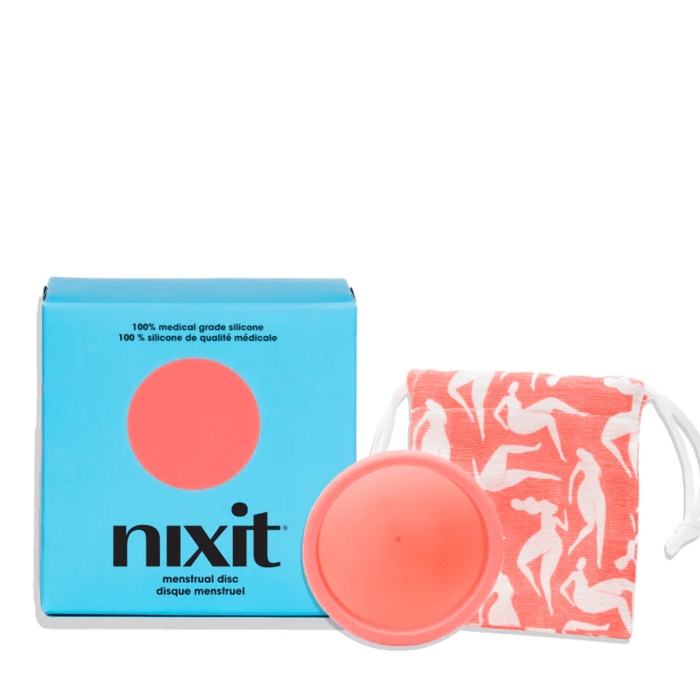
| nixit stands out for its suction-free design, which means there's no uncomfortable seal to break during removal. That can make a big difference if you've ever had trouble removing a disc. Made from ultra-soft, 100% medical-grade silicone. |
How to Make Removal Easier Next Cycle
Removal becomes more predictable with practice, and smart habits can make a difference from one cycle to the next. Proper placement of the disc is crucial; making sure it is tucked behind the pubic bone can keep it from feeling out of place.
Incorrect placement can cause leaks and make the disc harder to locate. Build a habit of taking deep breaths and releasing tension before reaching inside.
A small amount of lube on the rim supports smooth insertion and good position. Stick with water-based formulas, because oil-based options can degrade silicone and may cause irritation.
If you think your menstrual disc has been damaged or warped, and it’s affecting the removal process, it may be time for a replacement. See our guide on when you should replace a menstrual disc or cup.
People transitioning from tampons may find that mastering the hook method makes a stemless menstrual disc easier and more comfortable to use over time. For IUD users, removing a a nixit disc with an IUD in place in easier than most cup alternatives due to its no-suction design.
Tracking your cycle in an app may also help you identify days when your cervix feels more sensitive. This can help you plan disc removal for a time when you feel more relaxed and avoid unnecessary frustration.
Build Confidence with Menstrual Disc Removal
Knowing how to handle a stuck menstrual disc turns what could be a tense situation into a manageable routine. That knowledge can make menstrual care feel less stressful, which is why we share these tips.
We built our brand believing menstruating individuals deserve clear facts about their bodies. Our menstrual disc is suction-free, one-size-fits-most, and made from medical-grade silicone. It was designed to reduce the fear of a stuck disc.
We hope this guide answers your questions and eases any panic about a disc that feels stuck. Explore our period care products and find what works best for your body, so you can feel more comfortable and confident every cycle.
FAQs
Can a menstrual disc actually get lost inside my body?
No. Your vagina is a closed canal. The cervix blocks the top, so the disc cannot travel into your uterus or anywhere else. It might feel out of reach, but it's still in there and safe to remove.
Can a menstrual disc get stuck?
A menstrual disc can feel stuck depending on the situation. In some cases, a menstrual disc or cup can get stuck behind the pubic bone when it sits too high to reach due to body position or tension.
How do you get a stuck menstrual disc out?
As we covered in the post, the first step is to relax, alter your body position, bear down and use a finger to hook behind the rim. See our guide on how to use a menstrual disc for more information
How long can I leave the disc in if I can't get it out right away?
You can safely wear a menstrual disc for up to 12 hours. If you're struggling with removal, take a break, relax, and try again within that time frame. If it's been longer or you feel pain, contact a healthcare provider.
When should I see a doctor about a stuck disc?
If you've tried multiple times over several hours, feel severe pain, or notice unusual symptoms, reach out to your doctor. They can help remove it safely. This is rare, but professional support is always an option.
What if I can't reach the rim at all?
Try squatting lower, bearing down gently, or putting one foot on the toilet or tub edge. These positions can bring the disc closer. Remember to stay relaxed. Tension makes it harder to reach.
Can I use tweezers or tools to remove a stuck disc?
No. Using tools can cause injury. Stick with clean fingers. If you genuinely can't remove it yourself after trying different positions and relaxing, see a healthcare provider instead.
Is it normal for removal to hurt?
Removal shouldn't hurt if you're relaxed and moving slowly. If it does, you might be tense or pulling at the wrong angle. Pause, breathe, and try a gentler approach.
What are nixit menstrual discs made from?
nixit menstrual discs are made from 100% medical-grade silicone. It's body-safe, hypoallergenic, and reusable for years with proper care.
How much menstrual fluid does nixit discs hold?
nixit discs hold up to 70ml, which is about six times more than a regular tampon. This makes it ideal for heavy flow days without frequent changes.
How do I know if my nixit disc is placed correctly?
A correctly placed nixit disc sits behind your pubic bone and tucks up behind your cervix. You shouldn't feel it during wear. If it feels low, uncomfortable, or leaks, it may need repositioning.