

Understanding the various materials used in condom manufacturing is crucial for your sexual health. Different options vary in sensitivity, flexibility, and overall feel, all of which can affect comfort during sex.
The material itself can also influence overall effectiveness and protection against pregnancy and sexually transmitted infections. From stretch and heat transfer to thickness and texture, the type you choose can significantly affect how a condom feels and performs during use.
This guide walks you through the basics so you can choose the option that best fits your needs.
Why Materials in Condoms Actually Matter
Choosing a condom is not just about grabbing the first box off the pharmacy shelf. The specific material you select dictates your level of protection, physical sensation, and allergy safety.
It also determines what kind of lubricant you can safely use, since some materials (like latex condoms) can weaken or break down when exposed to oil-based products. When used perfectly, condoms prevent pregnancy 98 percent of the time.
However, real-world breakage and slippage rates can vary depending on the material used. Why does this happen? Some materials stretch more easily than others.
For example, condom failure rates may differ by as much as three times between highly elastic latex condoms and less flexible polyurethane condoms.
Key Insight: Breakage rates aren't just about user error. They can fluctuate by up to 3x depending on the material's rigidity and stretch. Choosing correctly between latex condoms and latex-free condoms is your first line of defense. |
Side-by-Side Condom Comparison Scorecard
Compare latex and non-latex condoms at a glance to see exactly how these materials stack up against each other. This clear overview will help you quickly identify the best choice for your personal preferences.
Material | Pregnancy Protection | STI Protection |
|---|---|---|
Latex | 98 % | Yes |
Polyisoprene | 98 % | Yes |
Polyurethane | 95-97 % | Yes |
Nitrile | 95-97 % | Yes |
Lambskin | 98 % | Weak protection |
How Materials Affect Protection and Comfort
For many people, natural rubber latex condoms remain the best condom material because of their durability and strong protection. Derived from the sap of rubber trees, natural rubber latex is highly stretchy and elastic.
Because of its flexibility, latex condoms mold easily to different shapes while retaining intense structural integrity. Standard latex condoms boast top-tier protection to prevent pregnancy and STIs with an incredibly low failure rate.
Research shows that a small part of the general population (roughly 1 to 6 percent) is allergic to natural rubber. For these users, polyisoprene condoms serve as the high-tech synthetic latex cousin of natural rubber. It is engineered in a lab to remove specific plant proteins that trigger a latex allergy.
This means you get comparable protection to prevent pregnancy and STIs with a slightly thicker and incredibly soft synthetic rubber feel.
Made from ultra-thin medical-grade plastic, polyurethane condoms are known for transferring heat well. Because of this, many people find that they offer a more natural sensation.
The trade-off is that polyurethane condoms have virtually zero stretch, leading to a slightly higher slip rate than latex condoms. Meanwhile, nitrile internal condoms feature a tough hypoallergenic synthetic rubber that easily adapts to body temperature and provides a snug fit.
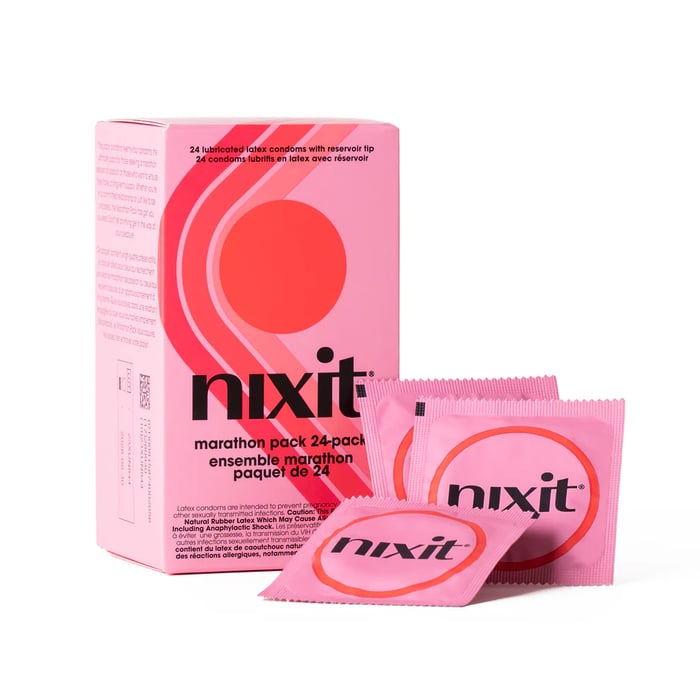
nixit condoms
Specialty Forms And Pleasure Features
The material you choose directly impacts the pleasure-enhancing features available in male condoms. Because manufacturing processes differ, non-latex condoms cannot always be manipulated the same way as latex condoms.
Thinner condoms below 40 microns are generally only possible with latex condoms. Textured condoms and additives are also primarily found in this variant, making it the most popular material.
Internal non-latex condoms offer a one-size-fits-most approach for reliable protection. In contrast, external latex condoms and polyisoprene condoms come in a wide variety of measurements and sizes, allowing for a more customized fit.
Sensitivity seekers looking for solutions for premature ejaculation often rely on thicker latex condoms or benzocaine-lined latex condoms. Those who enjoy extra stimulation may prefer studded or ribbed condoms for added friction.
Matching the right features and materials to your needs can significantly enhance the overall experience.
Pro Tip: Don't assume all materials offer the same features. If you need ultra-thin sensitivity or desensitizing textures, you will find the widest variety in latex or polyurethane condoms. |
Pro Level Safety And Pleasure Hacks
Even the most advanced materials will fail if you do not treat them right. Elevate your safe sex game with these simple pro-level implementation hacks to maximize durability for latex and polyisoprene condoms.
Quick tips to get the most out of your condoms:
- Store condoms properly. Keep latex and non-latex condoms in a cool, dark drawer. Heat inside wallets can quickly degrade rubber.
- Pinch the tip during application. Always pinch the tip of latex condoms when putting them on. Trapped air increases the risk of condom breakage.
- Apply lubricant strategically. Even with pre-lubricated condoms, adding a small amount to the outside and the tip can reduce friction and improve comfort. Inside the condom, however, keep the lubrication minimal to prevent slippage.
- Check the expiration date. Always check the back of the individual foil wrapper. If the condom is past the printed month and year, discard it immediately.
In 2023, 52 percent of sexually active high school students did not use a condom during their last sexual intercourse. Educating yourself on the proper usage of latex condoms is essential to reversing these concerning trends.
Knowing how to maintain safety measures with condoms effectively protects both partners.
Warning/Important: Never wear two latex condoms at once. The friction between the dual layers of condoms will almost certainly cause both to tear, leaving you entirely unprotected against pregnancy and STIs. |
When to Pair Condoms With Another Method
Sometimes condoms alone may not be enough for your specific risk profile. Consider adding another birth control method if condoms frequently break or slip during use, if you want extra pregnancy prevention, or if you are taking medications that may interfere with other contraceptive methods.
Couples who want a higher level of protection often combine condoms with hormonal birth control or long-acting methods. For long-term protection, talk with a healthcare professional about options that may better fit your needs.
You can also reduce risk by using dental dams or condoms during oral sex and keeping emergency contraception available.
What to Do If a Condom Breaks
Condom failure, while uncommon with proper use, can still happen. If a male condom breaks or slips off during use, stop immediately and hold the base while withdrawing to prevent further slipping. Wash the area gently with mild soap and water.
If pregnancy is a concern, consider emergency contraception as soon as possible. Most emergency contraceptives work best when taken within 72 hours, though some options remain effective for up to five days.
If you are concerned about potential STI exposure, consult a healthcare provider about testing. Some infections may not be detectable immediately, so follow-up testing may be recommended depending on the situation.
To reduce the risk of breakage in the future, check expiration dates before use, store condoms in a cool and dry place, use adequate lubrication, and ensure proper fit. Most condoms are highly effective when used correctly and consistently, but having a backup plan provides additional peace of mind.
The Bottom Line
Choosing the right material in your condoms is one of the simplest ways to protect your sexual health. Latex remains the most widely used option in the condom market because of its flexibility and strong protection to prevent pregnancy and sexually transmitted infections.
For those with a latex allergy, non-latex condoms such as polyisoprene, polyurethane, and nitrile can still provide reliable protection when used correctly. Understanding how latex and other materials affect comfort, durability, and sensitivity can help you choose the option that best fits your body and preferences.
Proper use matters just as much as the material itself. Store lubricated condoms correctly, check expiration dates, and use compatible lubricants to maintain their effectiveness.
If you are exploring options that prioritize comfort and clean ingredients, it may also be worth checking out nixit sexual wellness products, including their thoughtfully designed condoms and other intimacy essentials.
Frequently Asked Questions
Why are lambskin condoms not recommended for STI prevention?
According to the Centers for Disease Control and Prevention (CDC), natural membrane condoms made from lamb intestine contain tiny pores. Because viruses like HIV can pass through these openings, lambskin condoms are not recommended for preventing HIV or other sexually transmitted infections.
Does nixit offer latex-free condoms?
No, nixit condoms are made from natural rubber latex, so they are not suitable for people with a latex allergy. If you have a latex allergy, polyisoprene or polyurethane condoms are widely available and offer reliable protection against pregnancy and STIs.
For those who can safely use latex, nixit condoms are a high-quality option designed to be ultra-thin for better sensitivity. They are also vegan-friendly and free from additives such as parabens, glycerin, spermicide, fragrances, and dyes. When used correctly, they help reduce the risk of pregnancy and sexually transmitted infections.
Why can polyurethane condoms sometimes feel loose?
Most non-latex condoms made of polyurethane have very low elasticity compared to latex or polyisoprene. Because they are not as stretchy and do not snap back as easily, they may feel slightly baggy if the condom fit is not well matched to the user's anatomy.
Why is it important to check the expiration date on latex and non-latex condoms?
Materials degrade over time. Using an expired condom increases the risk of breakage or reduced protection. Most condoms made of latex, polyisoprene, polyurethane, and nitrile have a shelf life of three to five years from the manufacturing date when stored properly. Natural lambskin condoms generally have a shorter shelf life of about one year.
Always check the printed expiration date on the wrapper and discard any condom that is damaged or past its date.
Are nixit condoms vegan?
Yes. nixit condoms are vegan-friendly because they do not contain casein, a milk-derived ingredient sometimes used in latex condom processing.
What lubricants are safe to use with nixit condoms?
Water-based and silicone-based lubricants are generally safe to use with nixit condoms. Oil-based lubricants should be avoided because they can weaken natural latex and increase the risk of breakage.
Do ultra-thin condoms break more easily?
Not necessarily. High-quality ultra-thin condoms are designed to maintain strength while improving sensitivity. When used properly and stored correctly, they provide reliable protection.
What causes condoms to break during sex?
Condom breakage can happen due to improper storage, expired products, insufficient lubrication, or using oil-based lubricants with latex condoms.
How should condoms be stored to keep them effective?
Condoms should be stored in a cool, dry place away from heat and sunlight. Avoid keeping them in wallets or hot environments for long periods because heat can weaken the material.