Table of Contents
- What Your Fertile Window Is and What Trackers Can See
- Best Ovulation Trackers Compared: Apps, LH Strips, Temperature and Wearables
- Apps and Calendars: Good for Patterns, Shakier for Predictions
- LH Strips and Digital Readers: Tracking Ovulation Before It Happens
- Tracking Ovulation With Temperature, Wearables and Cervical Fluid
- How to Choose the Best Ovulation Tracker for You
- How nixit Fits Into Your Cycle Tracking
- Start Simple
- FAQs
The best ovulation trackers are the ones that match how regular your cycles are and how much effort you want to put in. Apps and calendars are the easiest start, LH test strips give you a heads-up before ovulation, and temperature charting (by thermometer or wearable) confirms it afterward. Many people combine two.
We're not going to crown one product. Brands change, and the right pick depends on how predictable your period is and whether you can face a thermometer at 6 am. The goal here is to help you start tracking ovulation without spending a fortune.
What Your Fertile Window Is and What Trackers Can See
Ovulation happens around day 14 of a 28-day cycle, though normal cycles run anywhere from 21 to 35 days, so the "day 14" rule misses plenty of people. Your fertile window is the stretch when sex could lead to pregnancy. Sperm can live in the reproductive tract for about 3 to 5 days, while the egg can be fertilized for about 12 to 24 hours after release. That puts the window at roughly the five days before ovulation through the day after.
No tracker sees the egg leave the ovary. Each one picks up a clue: your period dates, a hormone surge in urine, a small shift in resting temperature, or a change in cervical fluid. Some clues arrive before ovulation, which helps if you want to time sex, and some only after, which helps you learn your pattern.
Trackers, apps and fertility awareness are not reliable birth control on their own, and none of them protects against STIs. If you're not trying to get pregnant, talk to a healthcare provider about contraception.
Best Ovulation Trackers Compared: Apps, LH Strips, Temperature and Wearables
| Tracker type | What it measures | Accuracy and limits | Cost range | Best for |
|---|---|---|---|---|
| Apps and calendars | Period start dates, cycle length, symptoms you log | Estimates ovulation from past cycles, so it can miss when cycles vary | Free to a paid subscription | Beginners with fairly regular cycles |
| LH test strips (ovulation predictor kits) | Rise in luteinizing hormone (LH) in urine | Signals ovulation is likely soon; harder to interpret if a condition affects ovulation | Moderate; digital readers usually cost more than plain strips | Timing sex when trying to conceive |
| Basal body temperature (BBT) | Tiny rise in resting temperature after ovulation | Shows ovulation after the fact; easily thrown off by sleep, alcohol, illness | Low (a basal thermometer) | Learning your pattern over several cycles |
| Wearables | Skin temperature (often overnight) and other body signals | Hands-off, but results depend on the device and algorithm | Highest upfront; some add a subscription | People who dislike daily manual steps |
Apps and Calendars: Good for Patterns, Shakier for Predictions
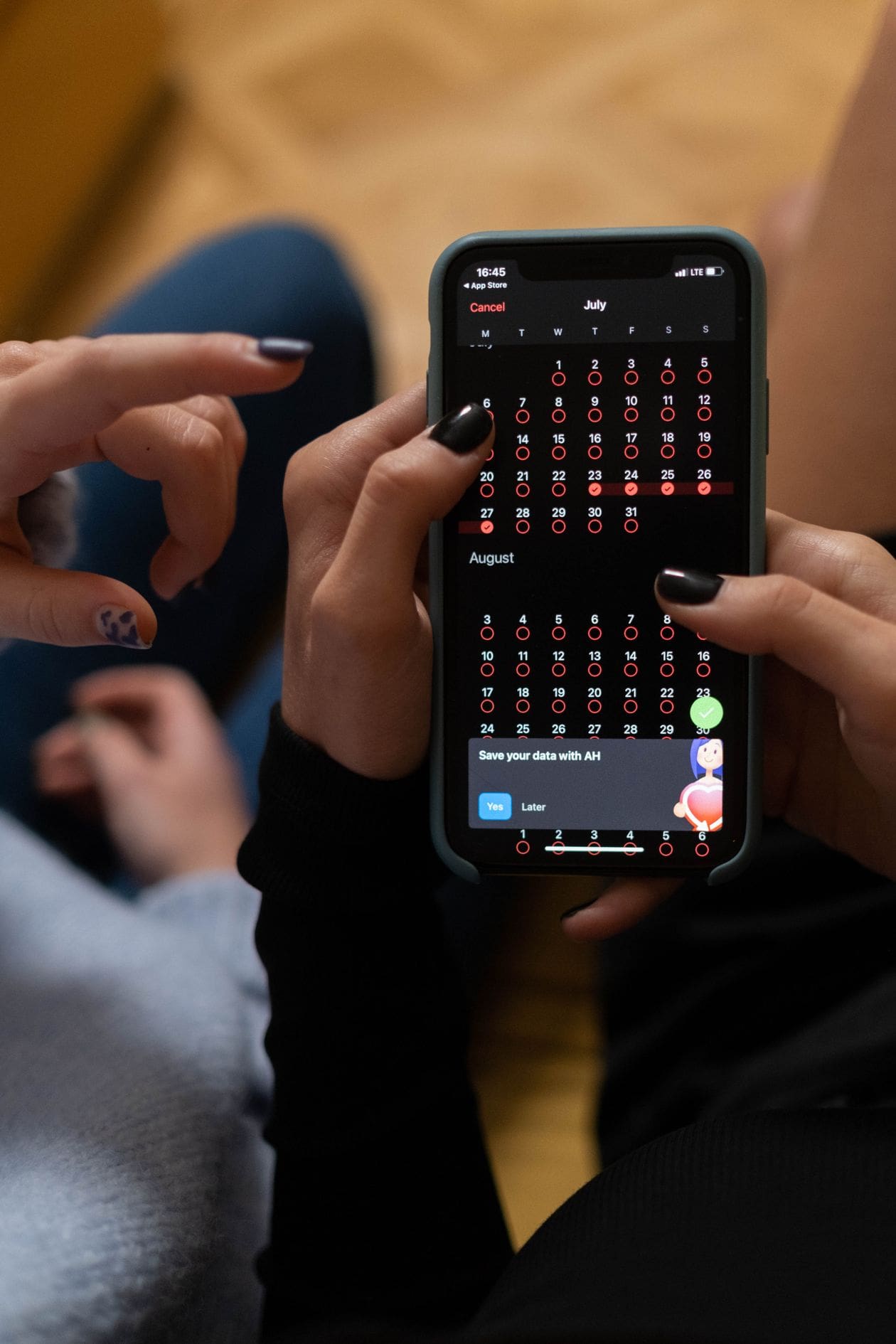
An app is the lowest-effort way to start tracking ovulation. You log the first day of each period, and it looks for patterns. You can keep track of your cycle on paper or in an app for several months, and that history is what any prediction is built on. Our beginner's guide to cycle tracking walks through what to log in the first few weeks.
An app only knows your last few cycles. If yours swing by a week, its prediction is a guess, however polished it looks. The Standard Days method only works if your cycle is consistently 26 to 32 days long, and fertility awareness methods won't work well with an irregular cycle. If that's your pattern, mention it to a healthcare provider. Apps and fertility monitoring devices exist, but none are officially recommended by the NHS, so be skeptical of any app that sounds sure of itself.
| Key Insight: Most trackers work best in pairs. A calendar or app tells you roughly when to start looking, and a second signal (a test strip, temperature or cervical fluid) tells you what your body is doing in the current cycle. |
LH Strips and Digital Readers: Tracking Ovulation Before It Happens
Ovulation predictor kits detect the LH surge. A positive result usually means ovulation within 36 hours, and you can start testing on day 10 of your cycle. Stick tests and digital readers both work this way, so the choice comes down to what you want to pay and how easy you want the result to read.
Does paying more buy better accuracy? In one small study, five at-home kits showed overall accuracy of roughly 92% to 97% against blood LH levels and performed similarly despite price differences. Sensitivity varied more than overall accuracy, so a kit can still miss a surge. That was only 23 patients, so it's a starting point and nowhere near the last word.
Strips have limits. Thyroid disorders and conditions such as polycystic ovary syndrome (PCOS) can affect ovulation, so if your results look odd cycle after cycle, see a healthcare provider rather than buying a different brand.
| Pro Tip: Write down the first day of every period, even if you plan to use test strips. Your cycle history tells you when to start testing. With a steady 28-day cycle, for example, you'd begin around day 10 instead of burning through a box in the first week. |
Tracking Ovulation With Temperature, Wearables and Cervical Fluid
Temperature tracking works backwards. Your resting temperature rises a small amount after ovulation, anywhere from about 0.2 to 0.5 °C (0.4 to 1 °F), and higher readings for at least three days in a row suggest you've ovulated. So a thermometer can't warn you in advance: you won't know you've ovulated until after it has happened.
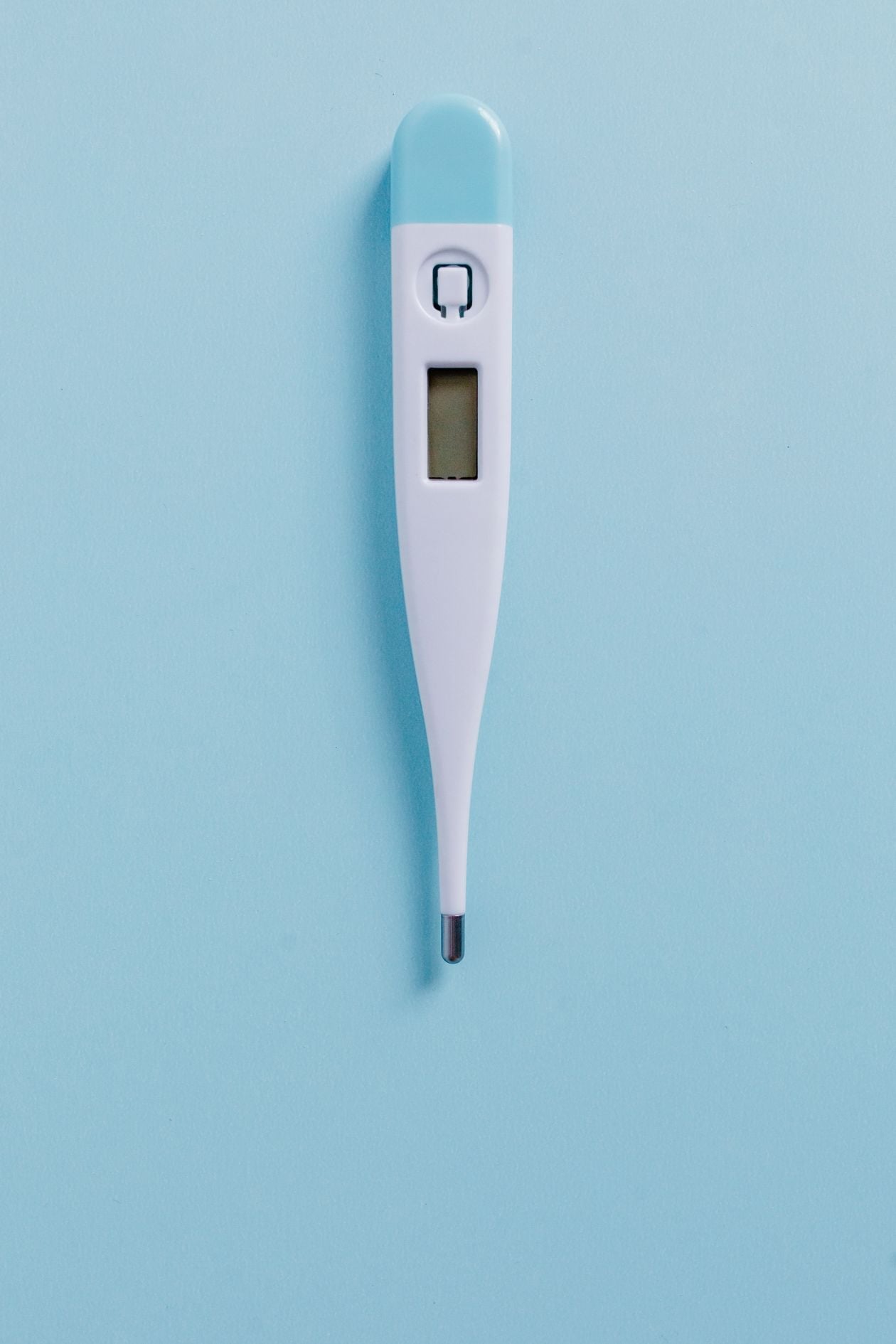
It's fussy. You take your temperature the moment you wake, before sitting up or talking, and the one morning you sleep through your alarm leaves a hole in the chart. Alcohol, fever, poor sleep, stress and travel across time zones can all skew readings, and you'll want at least three cycles to find a pattern. Think of your first month as practice.
Wearables take the morning routine out of it by reading skin temperature overnight. One prospective study of a wrist-worn device across 205 cycles found it correctly identified about 75% of fertile days within a two-day margin, and the authors concluded wearable sensors may accurately detect the periovulatory period. That's promising, but it tested a single device, and two authors disclosed ties to a company named in the study. A wearable is a convenient option, and nobody should treat one as a guarantee.
Cervical fluid is free, and you already have it. Just before ovulation, you may notice more thin, clear, slippery fluid, and just after there's typically less and it tends to become thicker. Because it reflects your current cycle rather than past ones, it's a useful second signal, and combining methods works better than relying on one. Our guide on what your cervical fluid tells you about fertility shows how to log it, and our explainer on hormone levels throughout the menstrual cycle covers the hormones behind all these signals.
| Important: None of these trackers is a contraceptive, and none of them protects against STIs. If you have very irregular periods, go months without a period, or think you may not be ovulating, contact a healthcare provider. Home tools can't tell you why. |
How to Choose the Best Ovulation Tracker for You
- Regular cycles, casual curiosity: start with an app or paper calendar and add cervical fluid notes.
- Trying to conceive: add LH strips to your calendar so you get a signal before ovulation.
- Irregular cycles: lean on in-the-moment signals (strips, fluid, temperature) rather than calendar predictions, and mention your pattern to a healthcare provider.
- Hate daily routines: consider a wearable, and check what its algorithm actually measures.
- On hormonal birth control: your cycle may not follow the usual pattern. Our post on whether you ovulate on birth control explains more.
If you're under 35 and healthy, you can try on your own for a year before seeking help; from age 35, or if issues are known, consider seeking help after six months. Tracking helps you learn your body, and it can't replace that conversation.
How nixit Fits Into Your Cycle Tracking
nixit menstrual disc
$54.00
At nixit, we make using a menstrual cup simple. Our disc-style, one-size-fits-all cup is made from ultra-soft, 100% medical-grade silicone, perfect for comfort and leak protection. Unlike firmer options, softer cups like our menstrual disc adapt to your body for… read more

None of our products measure ovulation, and Day 1 of your period is still the anchor for every tracker you try. What the nixit menstrual disc can do is take one thing off your plate: it can be worn for up to 12 hours and holds up to 70 ml, so a long day doesn't have to revolve around it.
It's suction-free and stem-free, comes in one size, and is made of 100% medical-grade silicone. It's FDA registered and authorized for sale by Health Canada, and it's built to last up to 5 years. It sits under the cervix and tucks behind the pubic bone.
The disc is a period product, not a contraceptive, and it doesn't replace birth control or STI protection.
Start Simple
Log two or three cycles, add the one signal that suits your life, and see what your pattern says. If it stays confusing, bring your log to a healthcare provider. When you're ready to sort out your period gear along the way, browse the nixit period care collection.
FAQs
What is the most accurate way to track ovulation?
No single method wins for everyone. Combining methods works better than relying on one, and fertility awareness methods won't work well with an irregular cycle. A healthcare provider can help if results don't add up.